Friday, March 31, 2006


Miscellany
Jonn Elledge on the mainstream media's middle class bias. As he is also a mainstream media journalist, glass houses?
Paulie on an idiotic LibDem, Red Ken and the Standards Board for England (again). Note to Mr Tuffrey. Term limits are neither Liberal nor Democratic; if you don't like an incumbent, campaign to get him out. If I do manage to move to London, no idea how I'd vote for the Mayoralty, Ken seems to be both great and awful at the same time. I doubt, however, that Mr Tuffrey will get a vote from me.
John Band is back. He stopped blogging just before I started, but I remember the discussion about why he had to, and the whole 'anonymity' thing. I'm glad I went with using my name openly, but it was a close call. Good to see you doing more than the occasional post at The Sharpener John, although that one is rather fine.
Oh, Boris on the House of Lords. He does go on a bit at times doesn't he? Interesting idea, not sure I like it, but all ideas are good as long as it's not "Tony choses them".
Also, welcome ContraTory to the blogroll; an example of the importance of going forth and commenting, most of the blogs I read regularly I've found through decent comments made by their authors elsewhere
Meh; by the time I finish that Israeli post they'll have had another election. Incidentally, anyone seen a decent write up of the Ukrainian results with an explanation as to voting system? I seem to be not finding one.
Paulie on an idiotic LibDem, Red Ken and the Standards Board for England (again). Note to Mr Tuffrey. Term limits are neither Liberal nor Democratic; if you don't like an incumbent, campaign to get him out. If I do manage to move to London, no idea how I'd vote for the Mayoralty, Ken seems to be both great and awful at the same time. I doubt, however, that Mr Tuffrey will get a vote from me.
John Band is back. He stopped blogging just before I started, but I remember the discussion about why he had to, and the whole 'anonymity' thing. I'm glad I went with using my name openly, but it was a close call. Good to see you doing more than the occasional post at The Sharpener John, although that one is rather fine.
Oh, Boris on the House of Lords. He does go on a bit at times doesn't he? Interesting idea, not sure I like it, but all ideas are good as long as it's not "Tony choses them".
Also, welcome ContraTory to the blogroll; an example of the importance of going forth and commenting, most of the blogs I read regularly I've found through decent comments made by their authors elsewhere
Meh; by the time I finish that Israeli post they'll have had another election. Incidentally, anyone seen a decent write up of the Ukrainian results with an explanation as to voting system? I seem to be not finding one.
Tag: Blogging
Thursday, March 30, 2006
Heroes, villains and ID
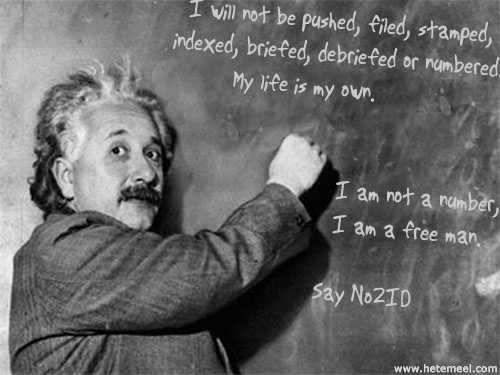
The bill got passed. We are all to be numbered and categorised. I will not submit. So, we have some heroes, some villains, and some dodgy characters. Heroes:
If you live in one of their constituencies, write to them and thank them? Especially the Labour MPs. Note to the Government. I agree with Bill Cash and Ian Paisley. Can you not see how wrong that is?
Villains:
Andrew isn't convinced that the Tories are as committed as Dave is saying. I hope that sensible Tories like him can put pressure on the leadership and MPs to keep them onboard. I think we'll all need to put pressure on them.
In the meantime, Longrider and me (elsewhere) are discussing when to renew your passport; you need to do it before Crapita get their hands on the NIR, which will be sometime in 2008, so best do it in 2007 just to be safe. As observed, you can do it at any time for any reason. Justin has more on the "compromise".
At the next General Election, at every Hustings, in every constituency up and down the country, we ask
Between now and then? Our best hope is that, like all other Government IT projects, especially those Capita get hold of, it'll all go horribly wrong.
Otherwise:
Labour:Source: Public Whip (via)
Diane Abbott (Hackney North & Stoke Newington), Jeremy Corbyn (Islington North), Kelvin Hopkins (Luton North), Lynne Jones (Birmingham, Selly Oak), John McDonnell (Hayes & Harlington), Robert Wareing (Liverpool, West Derby).
Conservative:
Adam Afriyie (Windsor), Tony Baldry (Banbury), William Cash (Stone), Philip Hollobone (Kettering), Stewart Jackson (Peterborough), Brooks Newmark (Braintree), Grant Shapps (Welwyn Hatfield), Richard Shepherd (Aldridge-Brownhill)
Lib Dems: All of them
Democratic Unionist Party & SNP: From what I can see, all of them as well
and a few others.
If you live in one of their constituencies, write to them and thank them? Especially the Labour MPs. Note to the Government. I agree with Bill Cash and Ian Paisley. Can you not see how wrong that is?
Villains:
Crispin Blunt (Reigate), Peter Bone (Wellingborough), James Brokenshire (Hornchurch), John Butterfill (Bournemouth West), Quentin Davies (Grantham & Stamford), David Davis (Haltemprice & Howden), Philip Dunne (Ludlow), Tobias Ellwood (Bournemouth East), Michael Fabricant (Lichfield), Mark Field (Cities of London & Westminster), Edward Garnier (Harborough), Cheryl Gillan (Chesham & Amersham), Robert Goodwill (Scarborough & Whitby), John Hayes (South Holland & The Deepings), Greg Knight (East Yorkshire), Andrew Lansley (South Cambridgeshire), Patrick McLoughlin (West Derbyshire), Patrick Mercer (Newark), John Penrose (Weston-Super-Mare), Eric Pickles (Brentwood & Ongar), Laurence Robertson (Tewkesbury), Graham Stuart (Beverley & Holderness), Robert Syms (Poole), Andrew Turner (Isle of Wight)I expect Labour MPs to vote in favour. But the Shadow Home Secretary? Write to those guys and ask them what they think they're playing at?
All Conservative.
Andrew isn't convinced that the Tories are as committed as Dave is saying. I hope that sensible Tories like him can put pressure on the leadership and MPs to keep them onboard. I think we'll all need to put pressure on them.
In the meantime, Longrider and me (elsewhere) are discussing when to renew your passport; you need to do it before Crapita get their hands on the NIR, which will be sometime in 2008, so best do it in 2007 just to be safe. As observed, you can do it at any time for any reason. Justin has more on the "compromise".
At the next General Election, at every Hustings, in every constituency up and down the country, we ask
Will you vote to abolish the National Identity Register
If they don't say yes, we get them out. Regardless of party.Between now and then? Our best hope is that, like all other Government IT projects, especially those Capita get hold of, it'll all go horribly wrong.
Otherwise:
YOU WILL:
ATTEND an appointment to be photographed, have your fingerprints taken and iris scanned, or be fined up to £2500. Additional fines of up to £2500 may be levied each time you fail to comply until you submit to these procedures.
PROMPTLY INFORM the police or Home Office if you lose your card or it becomes defective, or face a fine of up to £1000. If you find someone else's card and do not immediately hand it in, you may have committed a criminal offence punishable by imprisonment for up to two years or a fine, or both.
PROMPTLY INFORM the National Identity Register of any change of address or face a fine of up to £1000 (you will supply evidence of your previous addresses, not just your current address).
PROMPTLY INFORM the National Identity Register of significant changes to your personal life or any errors they have made or face a fine of up to £1000. You may also be obliged to submit to being re-interviewed, re-photographed, re-fingerprinted and re-scanned, or face a fine.
Charles Clarke: Lying, bullying slug
I agree with Tim, it's time to Google Bomb the slug. Why?
Rachel:
Rachel:
My father and I are looking forward to meeting Mr Clarke in the ten minutes the Home Secretary has allocated us next week, to discuss the matter of a public inquiry into the 7 July bombings, something that I and many other survivors are still seeking.Of all the NuLab Cabinet, this one is the one that gets to me the most. There's just something about him. Oh, I know what it is. He's Charles Clarke.
Analysis of Israeli electoral system is in draft stages. It'll hopefully be up tomorrow, short version: their system of voting is possibly worse than ours
Wednesday, March 29, 2006
"Voluntary" passports: a compromise that isn't
So, how long before I need to renew my passport then?
The Lord have caved in with a compromise that makes it worse, not better. You'll still be stamped and categorised, they'll still put your data on a centralised "secure" register, but you can have the sop of believing that you don't need a card.
Central pledge required from all candidates at the next General Election:
Henry Porter at Comment is Free:
The Lord have caved in with a compromise that makes it worse, not better. You'll still be stamped and categorised, they'll still put your data on a centralised "secure" register, but you can have the sop of believing that you don't need a card.
Central pledge required from all candidates at the next General Election:
I will vote to abolish the National Identity Register
If they don't sign up to it, campaign against them. Regardless of party affiliation. I refuse to be 'registered'.Henry Porter at Comment is Free:
The failure to register will be punished by a maximum fine of £2,500. The failure to apply in a manner prescribed (whatever that means) to renew your ID, or to inform the national identity register of a change of your details, or to surrender the ID card, or to notify the register of an invalid card, will all incur a maximum fine of £1,000.Read that through again. £2,500 fine if you forget to tell them you've changed your details?
£2,500 fine?
As someone who perpetually forgets to file paperwork, whose drivers licence is still the one I was first issued 13 years ago registered at my parents address (perfectly legally I add), this scares the shit out of me. Why do they need a £2,500 fine for what they're selling as an 'entitlement' card?The Lords have fallen for it. After a heroic, drawn-out defence they've been conned into believing it's the cards, rather than the database that backs up the cards, that's the problem.
- Bookdrunk on Burnham:
To describe any part of the ID card mess as 'absolutely clear' is either laughably delusional or grossly dishonest. The problem with Burnham is that it's hard to decide which applies.
More able to control access to my identity? What is this rubbish? How does an identity database protect my fingerprints, date of birth, iris pattern etc. etc. from being stolen? Doesn't it store all of those things in one handy central place? How does this stop my credit card or name being used? Answer: it doesn't and it won't.
Most Conservatives abstained, but 24 of them including their Home Affairs front bench spokesmen David Davis, Edward Garnier and Patrick Mercer voted with the Labour Government. Only 8 Conservatives voted against the motion with the Liberal Democrats.
It seems that David Cameron's NuTories cannot be trusted on civil liberties issues any more than Michael Howard's Tories could be.
- Porter (again):
People are beginning to see that ID cards are not being introduced so that they can identify themselves but rather so that the government can identify them and keep track of every important transaction in their lives.
We have to get them out of office.
They're a corrupt bunch of liars as well.Saturday, March 25, 2006
Blair is destroying democratic principles
Curious Hamster:
The system may encourage dodgy politics, it may push towards managerial centralism, but that's not a reason to accept it.
All politicians lie. Of course they do. So we caught one at it in a fairly enormous way? What's the problem? Why are you shocked? Get over it.That's right at the end, but read the whole post; the very idea that we should just accept the idea that they're all the same, that they all lie. It's just wrong.
I. Will. Not. And neither should anyone who professes to care about democracy.
The system may encourage dodgy politics, it may push towards managerial centralism, but that's not a reason to accept it.
Friday, March 24, 2006
Frenchman speaks English shock
Can we give this man a medal or something?:
Mr Chirac led three senior ministers out of the talks when Ernest-Antoine Seillière, the French head of the European employers' group Unice, abandoned his mother tongue on the ground that English is "the language of business".Chirac's a crook who never had the support of the French electorate. anyone that winds him up deserves praise, especially if they're honest about international business conditions.
Chicken Yoghurt
Has moved.
He's showing of his WordPress fu with a shiny new domain and everything. I'm still working on mine, amongst other things. Not really sure why I'm posting this really, anyone reading this blog that isn't reading Justin already really isn't paying attention; he's actually good at this blogging lark...
He's showing of his WordPress fu with a shiny new domain and everything. I'm still working on mine, amongst other things. Not really sure why I'm posting this really, anyone reading this blog that isn't reading Justin already really isn't paying attention; he's actually good at this blogging lark...
Technorati tags: blogging
Thursday, March 23, 2006
Capita boss quits over Blair loan
Hmm...
BBC NEWS | Politics | Capita boss quits over Blair loan:
No Aldridge, your company's reputation is being dragged through the dirt because >it's crap and feeds off government contracts. Nosemonkey has more starting here, then here, here and here.
Long term? Jonn Elledge:
Party finance reform is needed. However, all the discussion about where they get their money from, why not also look at what they spend it on and how it could be changed? They already need less money because of party political broadcasts, etc; individual candidates face campaign finance caps. Why not enforce national financial caps, and instead ensure more media coverage, etc?
BBC NEWS | Politics | Capita boss quits over Blair loan:
Mr Aldridge, who has run Capita since its foundation in 1984, said: "At present, the group's reputation is being questioned because of my personal decision to lend money to the Labour Party..."Get that? The group's reputation is being questioned because of his decision to loan money to the Governing party.
No Aldridge, your company's reputation is being dragged through the dirt because >it's crap and feeds off government contracts. Nosemonkey has more starting here, then here, here and here.
Long term? Jonn Elledge:
both parties have an interest in the status quo, because it allows them to maintain nice big war chests and safe seats. The two-party system institutionalizes undemocratic and corrupt behaviour.I have a full copy of the Power report, their suggestion to allow us to nominate a party to receive a small amount of cash when we turn up to vote seems interesting, need to read it through properly.
Voters don't share that interest. Neither do they have anything to gain from the current opaque party financing regime in Britain. If there is to be genuine pressure for reform, it has to come from the public - and the media.
Party finance reform is needed. However, all the discussion about where they get their money from, why not also look at what they spend it on and how it could be changed? They already need less money because of party political broadcasts, etc; individual candidates face campaign finance caps. Why not enforce national financial caps, and instead ensure more media coverage, etc?
The ID card debate
The Snow In Summer is covering the ID cards debates in an, shall we say, interesting manner? Sport commentary style, in a pro-celebrity bogey competition.
It starts here, then goes on for four more amusing posts. Highly recommended.
It starts here, then goes on for four more amusing posts. Highly recommended.
"Good evening. Like all games of Bogies!, this one began very quietly. Charles Clarke is again leading for the Professionals, beginning in October with a modest but firm "We want to make identity cards compulsary, and to those who object, we say 'Bogies'." A score of 1.8 on the snotometer.NB; I nominated it for Britblog, but he blocks all Google referrals so Tim likely thought the links were broken from the britblog gmail account.
Wednesday, March 22, 2006
Buy a prime minister
Forget about buying Peerages (actually, don't, but you know what I mean). Martin Kettle:
This time, however, the new prime minister will be chosen by Labour members and affiliates through the party's electoral college system. It means that 200,000 Labour members and several million mainly trade union affiliates will ballot to choose Blair's successor. That means there will be an election campaign, which means in turn that someone will pay for the campaign.So, who will be bankrolling Gordon's leadership campaign? Is that why they want a coronation, they can't afford it yet?
In its way, it will be a revolutionary moment in British party politics. And the most revolutionary thing about it is that, both in theory and practice, it is an opportunity for those who bankroll the candidates to purchase themselves instant influence and favours with the man who will be running the country. It will be Buy a PM time.
Tuesday, March 21, 2006
Clarke Vs Dromey - They're both crap
So, Charles Clarke has decided to go on the offensive. Anyone surprised? Unity:
So the fact that the party treasurer was kept in the dark about a series of secret loans from millionaire business that, according to one of the lender, Dr Chai Patel, were specifically solicited as loans and not donations in order to avoid having to declare them to the Electoral Commission is a sign that Dromey may not be up to his job, not that the party leadership have been caught with their hands in the cookie jar?Honestly? I think it may be both. VampWillow:
You are the Finance Director of the organisation and last year you spent �18 million on a very public project, only �3.5 million of which you actually know where it came from.Can we get Tired Tony and his cronies out of office please?
A friend of your boss 'acquired' the other �14.5 million and you have no idea where it came from or under what terms and this didn't cause you any worries, even though everyone in the world knew the money had been spent.
Do we need political parties?
Chris at Stumbling and Mumbling asks Do we need parties? and gives a list of reasons why parties damage politics. Given that I'm something of a fan of representative democracy, and believe that some sort of party system is a useful tool within a functioning parliamentary system, I thought I'd do a brief analysis.
The pursuit of the "median voter" that our system encourages, the need to capture the "centre ground" encourages managerialism over policy; "who will govern best" instead of "who has the best ideas". A more responsive electoral system would create a more diverse spread of ideas, both within the existing parties and from new ones now in with a chance of representation.
So, if we have a more responsive system, managerialism should (note, not would) reduce in favour of healthy debate. Because MPs would be more reliant upon a local support base and need extra support to keep being elected (safe seats do not exist in STV) they would be encouraged to make themselves distinctive and known, at least within their constituencies.
Chris ends with a suggestion that Direct Democracy could be a replacement for the party system. No thanks, direct democracy is dangerous:
parties do real damage:Absolutely, under the current electoral and whipping system. However, one of the advantages of STV as a system is to encourage debates within parties, indeed the Power Commission recommends a significant weakening of the whipping system; I believe that this combined with STV can significantly strengthen debate.
1. They stifle debate. Not just explicitly, via three-line whips and the threat of deselection, but implicitly, as MPs believe toeing the line is the road to career advancement.
2. They’re hierarchic. This encourages us to look to leaders to help us, rather than solve problems ourselves.They can do, and can be. However, looking to other party systems, is the US party system really heirarchic? Grassroots activism seems to be a key feature of US politics, and in the Green and Liberal Democrat parties within the UK, membership involvement in the policy process is strong, one of the features of the LibDem leadership contest I liked was the emphasis on policy and on how the leader should promote that policy.
3. Both main parties – perhaps because of their outmoded hierarchical nature – share a similar managerialist ideology. For me, though, the most important political question is: can political and economic institutions be re-organized on non-managerialist lines? Party politics forces this issue off the agenda.Again, the "two main parties". The electoral system constrains them and encourages this managerial style.
The pursuit of the "median voter" that our system encourages, the need to capture the "centre ground" encourages managerialism over policy; "who will govern best" instead of "who has the best ideas". A more responsive electoral system would create a more diverse spread of ideas, both within the existing parties and from new ones now in with a chance of representation.
So, if we have a more responsive system, managerialism should (note, not would) reduce in favour of healthy debate. Because MPs would be more reliant upon a local support base and need extra support to keep being elected (safe seats do not exist in STV) they would be encouraged to make themselves distinctive and known, at least within their constituencies.
4. Important issues often cut across party lines. The divisions over Iraq or civil liberties, for example, don’t map neatly into party lines.True. Europe, Iraq, etc, all issues that the big two are rather divided over. Of course, the LibDems are prety consistent on these issues, however as covered above, STV allows you to choose from candidates within the same party; a pro-war Labour MP could be voted out in favour of an anti-war MP, for example.
5. The Labour-Tory divide made sense when class alignment dominated politics – when unions vs management was a big issue, and when people felt instinctive class loyalties. Now we are (sadly?) no longer in this world, what do parties stand for?Class loyalties and the two-way divide are gone. To me, this is a good thing for democracy, it encourages a more healthy debate. Now, of course, there's a realignment going on.
Chris ends with a suggestion that Direct Democracy could be a replacement for the party system. No thanks, direct democracy is dangerous:
Representative democracy is an essential tool for a tolerant society, direct democracy leads to great thinkers drinking hemlock at the whim of the populace.Parties are a useful tool for grouping and predicting a candidate along broad lines. Two-party politics is deeply flawed, the old left / right class alignment is dying, we need an electoral system that allows for better choice and distinction.
Another new layout...
Is it great or awful?
I've added feeds for both Liberty Central and my Journal to the left sidebar, in place of some of the more annoying ads, although the text ads keep strangely disappearing. I've also significantly improved the way the columns are laid out, so it should display better on smaller monitor resolutions and, more importantly, my mobile phone browser.
Not quite sure about the red backdrop, both the colour and the idea, but thought I'd try it, and I've switched the large logo for a smaller flag and some text; the Dragon will be back, as soon as I've figured out how transparency works for copy/paste in The GIMP.
Opinions?
I've added feeds for both Liberty Central and my Journal to the left sidebar, in place of some of the more annoying ads, although the text ads keep strangely disappearing. I've also significantly improved the way the columns are laid out, so it should display better on smaller monitor resolutions and, more importantly, my mobile phone browser.
Not quite sure about the red backdrop, both the colour and the idea, but thought I'd try it, and I've switched the large logo for a smaller flag and some text; the Dragon will be back, as soon as I've figured out how transparency works for copy/paste in The GIMP.
Opinions?
Sunday, March 19, 2006
Reasons for electoral reform
In the last two days, I've read two rather good articles on electoral reform. I have a few issues with them, and dispute a few points, but overall, they're very good. Both on the same blog.
Normally, this would be great, right? I just link and get on to writing something substantial. OK, I'll link. Here and here. There, I've done it. I've linked to Neil Harding without taking the piss.
OK, the problems with his analysis.
Help me everyone, I agree with Neil!
Neil; are you a member of the Labour Campaign for Electoral Reform? If not, join, I've read some of their publications, they're good. If you are, can you ask them to do something about the godawful website?
Normally, this would be great, right? I just link and get on to writing something substantial. OK, I'll link. Here and here. There, I've done it. I've linked to Neil Harding without taking the piss.
OK, the problems with his analysis.
- He doesn't define what sort of system he favours Some electoral systems are better than others; one of the big problems with the reformist movement is that they use 'PR' as a catch all, and as there are some awful examples of countries using some form of Proportional Representation (one thinks of Italy pre-reforms and Israel to date as examples of bad list system PR) that the opposed brigade can use as a stick to beat. You need to define what you are in favour of, not define what you are against. I personally favour STV (the Single Transferable Vote).
- It's very 'class' based and partizan Neil is, avowedly, a Labour member. In addition, he's vehemently anti-Tory, in a way that can, at times, cloud his judgement. However, the class element of his analysis are partially valid, however they are dependent (as all class based analyses are) on a two-way model of understanding voters, when we've already established that the 4-way model is now more important. I suspect he's right though to highlight that a more inclusive electoral system also leads to a more inclusive society; I also agree with him about the misplaced fear of BNP support; they're winning elections under FPTP, that is a real worry, however I doubt they'd ever win 50+% of the vote needed to control under a decent system.
- FPTP leads to parties elected with minority support that the majority specifically voted against (Poll tax and ID cards spring to mind)
- FPTP encourages protests votes, such as for the BNP, whereas under STV all votes count
- FPTP encourages parties to fight just over the centre grouns, leading to disillusioned core voters, STV allows parties to be distinctive and allows for (indeed encourages) internal party debate
- FPTP encourages gerrymandering and where the boundary is is incredibly important
- FPTP is only more stable when you have two parties; Canada has had as many coalition governments as it has had one-party rule in the last few years, and having just had one election, they're already expecting to have another; remember 1974?
- FPTP advocates say you know what you're voting for; it gives a clear choice, yet manifesto commitments can be dropped easily; his example is the promise of a referendum on electoral reform.
- STV gives more choice to local people, FPTP and List systems are slaved to party heirarchies equally
- Reform would lead to a more representative parliament through electoral choice; noneed for all-women or all-EM shortlists
Help me everyone, I agree with Neil!
Neil; are you a member of the Labour Campaign for Electoral Reform? If not, join, I've read some of their publications, they're good. If you are, can you ask them to do something about the godawful website?
Saturday, March 18, 2006
Blog CMS systems?
Before I go too far down the route I've chosen, do any of my more techie and/or more experiences readers know of a blog management software (CMS) that can handle multiple subdomains and multiple users (with different priviledges) without needing more than one MySQL database?
I've come up with a pretty good use for one of my own domains, and will at some point migrate this blog there as well as do more tih other bits of it, but the hosting package I have only supports one MySQL without payment, my reading of Wordpress is it would need a new install and MySQL for each subdomain.
I'd love to be told I'm wrong though.
I've come up with a pretty good use for one of my own domains, and will at some point migrate this blog there as well as do more tih other bits of it, but the hosting package I have only supports one MySQL without payment, my reading of Wordpress is it would need a new install and MySQL for each subdomain.
I'd love to be told I'm wrong though.
Friday, March 17, 2006
IQ test thing
Just, well, because...
BrightonRegencyLabourSupporter: I'm not sure I accept a test that says I'm less intelligent.. everyone, Neil?
I agree with the commenters in his post, the logical question isn't actually logical. Also, IQ is a piss-poor method of measuring ability; I score high on IQ tests (higher than this normally), but I have to take my car to a mechanic to change a lightbulb in the headlight; completely beyond me.
But, y'know, Genius, Genius, Exceptional, dodgy question. Can't really argue with that ;-)
(Yeah, I know, I don't do thse things here, but, y'know, I've been to the dentists and become an uncle in one day, you expect substantive argument?)
BrightonRegencyLabourSupporter: I'm not sure I accept a test that says I'm less intelligent.. everyone, Neil?
| Your IQ Is 130 |
 Your Logical Intelligence is Below Average Your Verbal Intelligence is Genius Your Mathematical Intelligence is Genius Your General Knowledge is Exceptional |
I agree with the commenters in his post, the logical question isn't actually logical. Also, IQ is a piss-poor method of measuring ability; I score high on IQ tests (higher than this normally), but I have to take my car to a mechanic to change a lightbulb in the headlight; completely beyond me.
But, y'know, Genius, Genius, Exceptional, dodgy question. Can't really argue with that ;-)
(Yeah, I know, I don't do thse things here, but, y'know, I've been to the dentists and become an uncle in one day, you expect substantive argument?)
Today is St Patrick's Day
Nosemonkey has an idea; collect some money for some hospices. Details...
Europhobia: Today is St Patrick's Day.
Europhobia: Today is St Patrick's Day.
Technorati tags: St Patrick's Day, Charity
I am now an uncle
Completely irrelevent, but I just got back in from the dentists and my mum texts me to say my sister has given birth, 7lb 9oz.
Which brings us toa point, why are babies always in measures I barely understand? We started using metric before I was born. I wasn't taught Imperial measures at school. Why, more than 30 years later, are kids announced in measures that just don't make sense?
Ah well. Just sorting out some paperwork, then off to the hospital.
Which brings us toa point, why are babies always in measures I barely understand? We started using metric before I was born. I wasn't taught Imperial measures at school. Why, more than 30 years later, are kids announced in measures that just don't make sense?
Ah well. Just sorting out some paperwork, then off to the hospital.
Britain needs a constitutional convention
I think it's pretty much established amongst the informed bunch that read this blog that something is rotten in the state of Britain. Liberty Central is a good project aimed at working out a new way of governing the country. Hopefully, it can be used to build pressure to sort the whole mess out.
The big problem is that for many, reformers are a series of disparate, single issue campaigners. We have:
I favour this approach, in part, for the Lords (or whatever we call the replacement). So, in order to solve the increasingly urgent issue that is the make up of the second chamber, we also need to figure out what level below Westminster we want as well.
This leads to a worried government, that plays to a perceived gallery for headline grabbing initiatives, yet one that knows, deep down, that while it has a 'legitimate' mandate, it does not have a popular mandate; protesters are limited and arrested as never before, yet are increasingly likely as what are viewed as traditional liberties are encroached upon as never before.
Part of the recommendations of the Power commission is a new Concordat. Essentially, they are right. As Nosemonkey points out in comments here, the Bill of Rights is effectively irrelevent. Yet any constitutional historian worth their salt can confirm that the Bill of Rights is the founding principle of the modern parliamentary system. If it's no longer relevent, what is?
We, all of us, who are concerned with the constitution, who want to address these issues, need to work together to pressure our rulers to call a new convention. This may be a good place to start.
The big problem is that for many, reformers are a series of disparate, single issue campaigners. We have:
- electoral reformers
- civil liberties groups
- devolutionists of various stripes
- parliamentary reformers (concentrating currently on the Lords)
The "West Lothian Question" is one of vital import to the future of the country
It has come about because a government that was initially radical and prepared to decentralise heavily has acquired cold feet and isn't prepared to address the real issues and concerns of those that haven't (yet) had power devolved from Westminster. Yet, ultimately, very few if any are genuinely calling for the complete break up of Britain, the Scots Nats appear to be losing, not gaining, ground in Scotland and the CEP is adament that they want parity for England within the UK (or Britain, depending on whether the person in question wants to keep the 1800 Act).You cannot fix the "England Question" independent of the other problems
Virtually every other country of significance that has a bicameral Parliament draws its second chamber members as representatives of the next highest administrative level. US and Australian Senators are elected directly, the German Bundesrat members are sent as representatives of the Lander assemblies, etc.I favour this approach, in part, for the Lords (or whatever we call the replacement). So, in order to solve the increasingly urgent issue that is the make up of the second chamber, we also need to figure out what level below Westminster we want as well.
The electoral system that we use is outdated
It specifically encourages a two-party system, yet increasingly a market orientated society wants genuine choice at election time as well, two-party politics doesn't cut it any more. So we have a government elected with a fairly substantial majority with much less than 40% of the vote; compare this to 1992, when John Major got the highest number of votes cast since 1945, and a higher vote share than either Maggie or Blair ever acheived, yet had a wafer thin majority.This leads to a worried government, that plays to a perceived gallery for headline grabbing initiatives, yet one that knows, deep down, that while it has a 'legitimate' mandate, it does not have a popular mandate; protesters are limited and arrested as never before, yet are increasingly likely as what are viewed as traditional liberties are encroached upon as never before.
Part of the recommendations of the Power commission is a new Concordat. Essentially, they are right. As Nosemonkey points out in comments here, the Bill of Rights is effectively irrelevent. Yet any constitutional historian worth their salt can confirm that the Bill of Rights is the founding principle of the modern parliamentary system. If it's no longer relevent, what is?
I am not in favour of a 'written constitution'
A study of the US shows that such exercises in aspic setting can, in later years, come back to bite you; the veneration of their outdated document the Americans show is worrying, let alone damaging. We need a new Bill of Rights, new Acts of Settlement. We need a British solution.We need, as a nation, to determine, once again, how we are governed.
We, all of us, who are concerned with the constitution, who want to address these issues, need to work together to pressure our rulers to call a new convention. This may be a good place to start.
Thursday, March 16, 2006
Comment is Free, and so is speech
First, this by Jim at Moore than this:
Free speech means the right to give and take offence, the right to argue your point against others, the right to be wrong, stupid, bigoted, hateful and offensive. There will be a lot of arguing. But if you're on the side of truth, you will eventually win.Who I encountered after he commented in the excellent post and discussion at Robert Sharp's blog on the new Guardian Comment is Free uberblog, which I'm not sold on yet; more discussion of which is at Europhobia.
Legislative and Regulatory Reform Bill
Read. Amongst the list of Acts the Government has specifically rejected from a list of proposed immune from the Act Acts?
Bill of Rights 1688That's right, the founding document. If they get this passed, then they can, and want to be able to, amend pretty much everything by executive order.
We have to stop this bill.
Save Parliament (from itself if need be). If you haven't done so yet, write to your MP. Especially if they're a Labour MP.Buy a (Virtual) Peerage!
I've been planning a substantive article on Lords reform at some point, but in the meantime, I've signed this at Pledgebank:
Yes, I know it sounds daft. Bear with me, when I've finished it off it'll be here and on Liberty Central. In the meantime, go sign up for a certificate of (in)authenticity. Update: Get them here. I especially like:
As an introductory offer, we are currently offering a 25% discount on all Virtual Peerages. But hurry - this offer must end on 22 March!I'm not, actually, completely sold on a fully or predominantly elected Lords, I'd like us to build on the German Bundesrat model, combine it with the idea of experts drawn from interest groups and campaigning bodies, and get the rest via the old Athenian model; selection by Lot, draw people at random, from across society, in a set length term similar to Jury service but full time and paid for.
Yes, I know it sounds daft. Bear with me, when I've finished it off it'll be here and on Liberty Central. In the meantime, go sign up for a certificate of (in)authenticity. Update: Get them here. I especially like:
* The Elect the Lords campaign regrets that it cannot accept a loan as payment.
Tuesday, March 14, 2006
Scrabble score
Pholph's Scrabble Generator          My Scrabble© Score is: 18. What is your score? Get it here. |
That's not good. Useless selection of letters, that's the problem...
Pholph's Scrabble Generator   My Scrabble© Score is: 27. What is your score? Get it here. |
That's better ;-)
FA letter intercepted
My intense dislike of football generally, and professional footballers specifically, doesn't stop me from finding this from Gareth. Go read.
Yes, I am working on a substantive post. No, I'm not getting very far; bloggers block has struck, blame the week off work?
Yes, I am working on a substantive post. No, I'm not getting very far; bloggers block has struck, blame the week off work?
Ian Blair - do you actually blame him?
The consensus is that recording conversations is wrong (rung a call centre recently?), that he should have told the Attorney General (possibly, but, well, Lord Goldsmith?). Me? I don't know which side is worse. Bookdrunk?:
You're Ian Blair. Some of your men have just shot someone, you suspect that person was innocent of what he's accused of having been shot for. The Governments chief lawyer is on the phone, you don't have someone available to take notes. Wouldn't you want a record of the conversation and any 'advice' you were given?
I think Blair (both of them) should go. But Ian Blair shouldn't go for this one. I think he was just covering his back. Given Goldsmith's track record, do you actually blame him for that?
The second most likely reason is that while Blair might have been willing to publicly take the blame for decisions made under his watch, he wasn't prepared to be fired for having acted on the 'best' legal advice available at that time ( i.e. something emanating not a million miles from the Attorney General's office).We're talking Tony Blair's Attorney General. You remember, right? The guy who wrote that opinion on the Iraq war legality after some conversations with Bush's team?
You're Ian Blair. Some of your men have just shot someone, you suspect that person was innocent of what he's accused of having been shot for. The Governments chief lawyer is on the phone, you don't have someone available to take notes. Wouldn't you want a record of the conversation and any 'advice' you were given?
It's not illegal to tape a telephone conversation - only to reveal the contents of the conversation to a third party without prior permission of those you have recorded.Unless I've missed it, there's no allegation that the content of the conversation has been leaked, just that it exists.
I think Blair (both of them) should go. But Ian Blair shouldn't go for this one. I think he was just covering his back. Given Goldsmith's track record, do you actually blame him for that?
Monday, March 13, 2006
Is Charles Clarke is unwell?
Justin has the story:
Fears are mounting for the mental wellbeing of the Home Secretary, Charles Clarke.Most significant of which is Rachel's post on a meeting the Home Secretary had with her father.
Save Parliament!
Save Parliament!
(via) - a useful round up and brief summary, with outgoing links to the various info sources. Also, Davide at Nether World has an excellent post on the subject.
(via) - a useful round up and brief summary, with outgoing links to the various info sources. Also, Davide at Nether World has an excellent post on the subject.
Technorati tags: Democracy, Freedom, Parliament, Legislative and Regulatory Reform Bill, Leg Reg, Abolition of Parliament Bill
Sunday, March 12, 2006
Tim Worstall: Britblog Roundup # 56
Tim Worstall: Britblog Roundup # 56 is up. Even better, more than half the entries I haven't already read, which is a good sign. For those unaware, Tim takes nomination by email, britblog at gmail dot com, and is looking for anything that's well written and interesting, regardless of topic, as long as it's about Britain, by a Brit or by someone in Britain. That includes posts made on LiveJournal or even (shudder) MySpace.
Two of my nominations in there; anyone care to guess which?
Two of my nominations in there; anyone care to guess which?
Post Punk Unkle: Free Thoughts Of An Aging Man
Clicking on commenter links, I find Free Thoughts Of An Aging Man by Post Punk Unkle:
I came across the following quotation from Ian M Banks today;Some good stuff on ID cards and those cartoons. Welcome to the blogroll Unkle.
“…if in a sizable population there are one hundred rebels, all of whom are then rounded up and killed, the number of rebels present at the end of the day is not zero, and not even one hundred, but two hundred or three hundred or more; an equation based on human nature which seems often to baffle the military and political mind.”
If only Blair /Bush understood this before their ill-conceived invasion of Iraq.
Saturday, March 11, 2006
Atlantic Rift: Something's rising in the east
Jonn Elledge:
I don't understand it either. But I'm guessing it says that you can take our liberty, but you'll never take our freedom to download porn.Sort of on topic, but very very funny. Or maybe I just need to sleep.
Google Search results
How about this for a very nice little referral? protest rights England history.
One of Paul's better articles I think, even if he did get his Machiavelli mixed up ;-)
One of Paul's better articles I think, even if he did get his Machiavelli mixed up ;-)
On Westminster Bridge — Falconer
Just got back in from a day trip to London, travelled with friends to see the Imperial War Museum; for some reason had never gone before despite it being both free and 5 minutes walk from where a friend lives.
Will definately go again. Didn't have any time to do stuff around town, except briefly go to Westminster and walk across the bridge — habit, have to walk across if I can when in London, mixture I guess of too much Wordsworth and a love of the buildings there.
Anyway, to a brief blog topic, I understand Charlie Falconer has made an arse of himself; unless anyone has proposed a better Google Bomb, I reckon that one would do. No demand?
Message for Mr Blair's best mate; every time you say there's no demand, when there palpably is, you strengthen their case and their argument by default.
Why don't you do your job as head of the Department of Constitutional Affairs and try to actually solve the West Lothian question? It exists, there's a lot of debate about how to solve it, some ideas are better than others, some have more popular appeal than others. The longer you leave trying to solve it, the worse the problem gets, and the more the justifiable resentment grows.
I, personally, think a Parliament for England is not a good solution to the problem. But to deny the problem exists? Foolish and blinkered. One of the highest paid ministers of the crown should not be foolish and blinkered. So why do I suspect that that is what Charlie is?
Do your job Lord Falconer. Call a Constitutional Convention and let us hammer out how we want to be governed south of the border.
Will definately go again. Didn't have any time to do stuff around town, except briefly go to Westminster and walk across the bridge — habit, have to walk across if I can when in London, mixture I guess of too much Wordsworth and a love of the buildings there.
Anyway, to a brief blog topic, I understand Charlie Falconer has made an arse of himself; unless anyone has proposed a better Google Bomb, I reckon that one would do. No demand?
Message for Mr Blair's best mate; every time you say there's no demand, when there palpably is, you strengthen their case and their argument by default.
Why don't you do your job as head of the Department of Constitutional Affairs and try to actually solve the West Lothian question? It exists, there's a lot of debate about how to solve it, some ideas are better than others, some have more popular appeal than others. The longer you leave trying to solve it, the worse the problem gets, and the more the justifiable resentment grows.
I, personally, think a Parliament for England is not a good solution to the problem. But to deny the problem exists? Foolish and blinkered. One of the highest paid ministers of the crown should not be foolish and blinkered. So why do I suspect that that is what Charlie is?
Do your job Lord Falconer. Call a Constitutional Convention and let us hammer out how we want to be governed south of the border.
Friday, March 10, 2006
Didn't see this one coming...
Honest. Congratulations Justin.
The proper column in a decent paper shouldn't be far off now for a few of the top end, right?
The proper column in a decent paper shouldn't be far off now for a few of the top end, right?
Technorati tags: Blogging
Thursday, March 09, 2006
Badger cull consultancy
Steve's random and often belligerent Journal:
If you have time TODAY, and want my undying gratitude, please email ... deadline for consultation on a UK-wide Badger Cull is tomorrowFollow up to Paul's post on the badger cull from last December
Technorati tags: badger cull, DEFRA
Wednesday, March 08, 2006
Why are we so badly governed?
Catching up. This:
That we're going to be saddled with ID cards because Home Office ministers don't want to back down and admit what an utterly poorly thought-through idea they are, how ineffectual they will be in fighting terrorism?Which reminds me, need to get in touch with whoever's running No2ID locally.
Rape and Consent
Tuesday, March 07, 2006
Left / Right Vs. Up / Down
Would it work?:
Do you think that if we ran a publicity campaign to let people know that the left/right distinction is French, then we could rely on latent British Francophobia to finally abort the distinction?Well, something has to. "The Lib Dems move Right", "That's a left-wing policy". Um, no. It's neither. left vs right is and ill-defined, misunderstood term that is abused by the commentariat (especially in the MSM) who show little understanding of the history. By the definition of what was meant when the term was coined (ie political reform at the time of the French Revolution) the LibDems are, and always have been, the most extremeyl left-wing of all parties. But these days they mean economic policy only. Outdated terminology used by media types looking for another "split".
Can we please stop calling people "modernisers"
Sorry. Rant over. Still horribly busy, still catching up, haven't even looked at half the blogs I normally read daily, and it's about to turn midnight. Still, Paddy's back.Technorati tags: LibDems, Left vs Right
Sunday, March 05, 2006
Campbell, the Lib Dems and me
I just read Ming Campbell's Conference speech:
Not going to change the way I write about stuff though; there remain policies I disagree with, naturally. But, while I like the sounds Dave is making, I'm not convinced it's anything more than spin. I know where I stand with the Lib Dems. On the issues I set the blog up to write about, I pretty much agree with them.
Paul, naturally, remains a separate person, last we spoke about it, he doesn't do partizan. I don't, really. But it's time to stand up and be counted I guess.
We need to get the current Government out of power. To do that, we need to support those parties in a position to do so, and work with those politicians on the right side of the debate. Each of us in our different ways. I've chosen my way (or at least part of it).
Now, I guess, make contact with the local party (rather than just the local MP), and see what needs doing. A decent website would be a good start.
A principled liberal alternative has never been more needed than when there are people being abused and held without trial at Guantanamo Bay. The Prime Minister calls it “an anomaly”.It was going to happen eventually. Membership renewed. I am now, once again a Liberal Democrat.
Let me address him directly; Prime Minister, this is not an anomaly - This is an outrage.
But under this government, the “anomalies” are becoming the norm. schemes to keep citizens under house arrest; Identity cards; A Labour party member – a Labour party member - Walter Wolfgang arrested as a terror suspect for daring to heckle at the Labour Party Conference; taken into custody for shouting ‘Rubbish’ at the Foreign Secretary. I hope they don’t introduce that in the House of Commons? otherwise I will be joining him.
And members of the public like Maya Evans arrested outside Downing Street just for reading out the names of British soldiers killed in Iraq; Who knows what this government would have done with Siegfried Sassoon, or Wilfred Owen, if it had been in office during the First World War.
Once Westminster was the cradle of democracy; Under this government it is becoming the graveyard of democracy.
Not going to change the way I write about stuff though; there remain policies I disagree with, naturally. But, while I like the sounds Dave is making, I'm not convinced it's anything more than spin. I know where I stand with the Lib Dems. On the issues I set the blog up to write about, I pretty much agree with them.
Paul, naturally, remains a separate person, last we spoke about it, he doesn't do partizan. I don't, really. But it's time to stand up and be counted I guess.
We need to get the current Government out of power. To do that, we need to support those parties in a position to do so, and work with those politicians on the right side of the debate. Each of us in our different ways. I've chosen my way (or at least part of it).
Now, I guess, make contact with the local party (rather than just the local MP), and see what needs doing. A decent website would be a good start.
Political Blogging and talking to God
This from Ken at Militant Moderate is a nice analysis of the way blogging could be used by politicians and their supporters in the future. I think, overall, I agree with him; blogging is at its best when talking through policy and ideas rather than personality and gossip (although, let's face it, the latter can be fun(ny) at times). Huhne was very popular amongst the LibDem bloggers precisely because he engaged the policy debate strongly, and has done his future prospects a world of good by running I think.
Also, this on the Snow in Summer. The GOD corporation has a record of its discussions with Tony, but they're protected by client priviledge. Definately worth a read through.
Also, this on the Snow in Summer. The GOD corporation has a record of its discussions with Tony, but they're protected by client priviledge. Definately worth a read through.
Saturday, March 04, 2006
Millennium Dome, Elephant on Built to Last
Paul's summary made the Guardian, but I think they missed a much better review myself, The Very Fluffy Diary of Millennium Dome, Elephant: Day 1884: PS:
Mr Balloon said he was in favour of NICE things and against NASTY things.I'm not quite sure I believe I'm adding a toy elephant to the blogroll, even if the owner isn't anonymous. Dave Cameron = Mr Balloon. Not quite sure yet myself, but then, every politician needs a suitable nickname, right?
He said he was in favour of saving the ENVIRONMENT because that was NICE
But he was against stopping people from making POLLUTION because that would be NASTY.
My head may be full of wool but this seems sensible to me. I don't know why Daddy is foaming at the mouth!
I have now looked up VACUOUS: Devoid of matter; empty – this is how balloons WORK isn't it!
Technorati tags: Cameron, Mr Balloon
Give me liberty...
Rachel from north London: Give me liberty...:
My government doesn't care. It has contempt for the ordinary people. My government tells us of a new 'respect agenda' yet it shows us no such respect, even when we turn out protesting in the streets in our millions. It orders dissenting voices a kilometre away from Parliament. Since New Labour came to power, the number of people voting has gone down to the lowest levels ever; meanwhile we have seen the largest public protests ever in this country.
Technorati tags: Liberty Central, Freedom
Friday, March 03, 2006
Dentists, alcohol and Huhne's google ads
Two weeks back, I wrote a post at The Kitchen about my past history with dentists. Well, today was the first follow up visit, and depite it going very well, I'm still all over the place. Weird, I have no problems with most things, but having three fillings has messed my head up. So, no coherence from me tonight, I've had too much whiskey. I've got a bit on electoral systems, tactical voting, Duverger and third party squeeze on the way, summary is that "tactical voting" is a natural phenomena, a bye-product of the system, normal.
 Maybe, soon. But we're doing an office move over the weekend, been planning details all week, so I'm busy. In the meantime, can someone tell Huhne that he lost already, and the adwords campaign ought to be cancelled? I may have wanted him to win, but this is silly.
Maybe, soon. But we're doing an office move over the weekend, been planning details all week, so I'm busy. In the meantime, can someone tell Huhne that he lost already, and the adwords campaign ought to be cancelled? I may have wanted him to win, but this is silly.Thursday, March 02, 2006
Election systems: Not a functioning market
A Big Stick and a Small Carrot: Going for Gold:
One for the free marketeers who support first past the post to ponder.He is, of course, completely correct. The fact that it's bad for democracy and breaks badly when you throw more parties intot he mix is another good reason to support STV.
The two party system is non-competitive. It is comparable to a captive, demand constant, oligopoly market in which consumers have a choice between only two approximately equally sized suppliers.
Jowell(gate), and owning nine houses.
Question to Labour members/supporters. I openly describe myself as a socialist (with a distinct, small 's'), and technically the Labour party still believes in Socialism (witha big 'S'). So, why are you a member of a party that is so in touch with its principles that Cabinet Ministers own 9 houses and gifts of $600,000 aren't even mentioned between them?
Seriously. Why? Ah, whatever, I know a lot of Labour members are genuine believers in what the party is supposed to stand for. Shame about the leadership. Still, odds of her keeping a job post-Blair?
Oh yeah. Read. Just because, well, it's another gem from Owen.
Seriously. Why? Ah, whatever, I know a lot of Labour members are genuine believers in what the party is supposed to stand for. Shame about the leadership. Still, odds of her keeping a job post-Blair?
Oh yeah. Read. Just because, well, it's another gem from Owen.
My predecessor, Robin Butler, cleared both Jonathan Aitken and Neil Hamilton. They both turned out to be lying. Robin was an upper class toff who could not believe that a member of the establishment would lie to him. I have no intention of repeating that mistake.Update:Missed this one from Craig:
I simply do not believe her. Let me be perfectly plain. I am calling her a liar. Go on, sue me.
Hello Guardian readers
The article listed is here, written by co-blogger PaulJ. I myself wrote a summary of opinions on Sunday's Observer column from Mr Blair here.
Generally, we're pretty interested int he ways the internet can be used to cover the news better and for communicating between politicians and the electorate, examples here and here, and were very much involved in the creation of the new Liberty Central project, which I recommend you look into if you're at all interested in the way the country is governed.
To the Guardian editorial staff? A little warning would be nice y'know, our contact details are listed openly. Thanks to John for the heads up; swamped in the office today.
Generally, we're pretty interested int he ways the internet can be used to cover the news better and for communicating between politicians and the electorate, examples here and here, and were very much involved in the creation of the new Liberty Central project, which I recommend you look into if you're at all interested in the way the country is governed.
To the Guardian editorial staff? A little warning would be nice y'know, our contact details are listed openly. Thanks to John for the heads up; swamped in the office today.
Subscribe to:
Posts (Atom)